
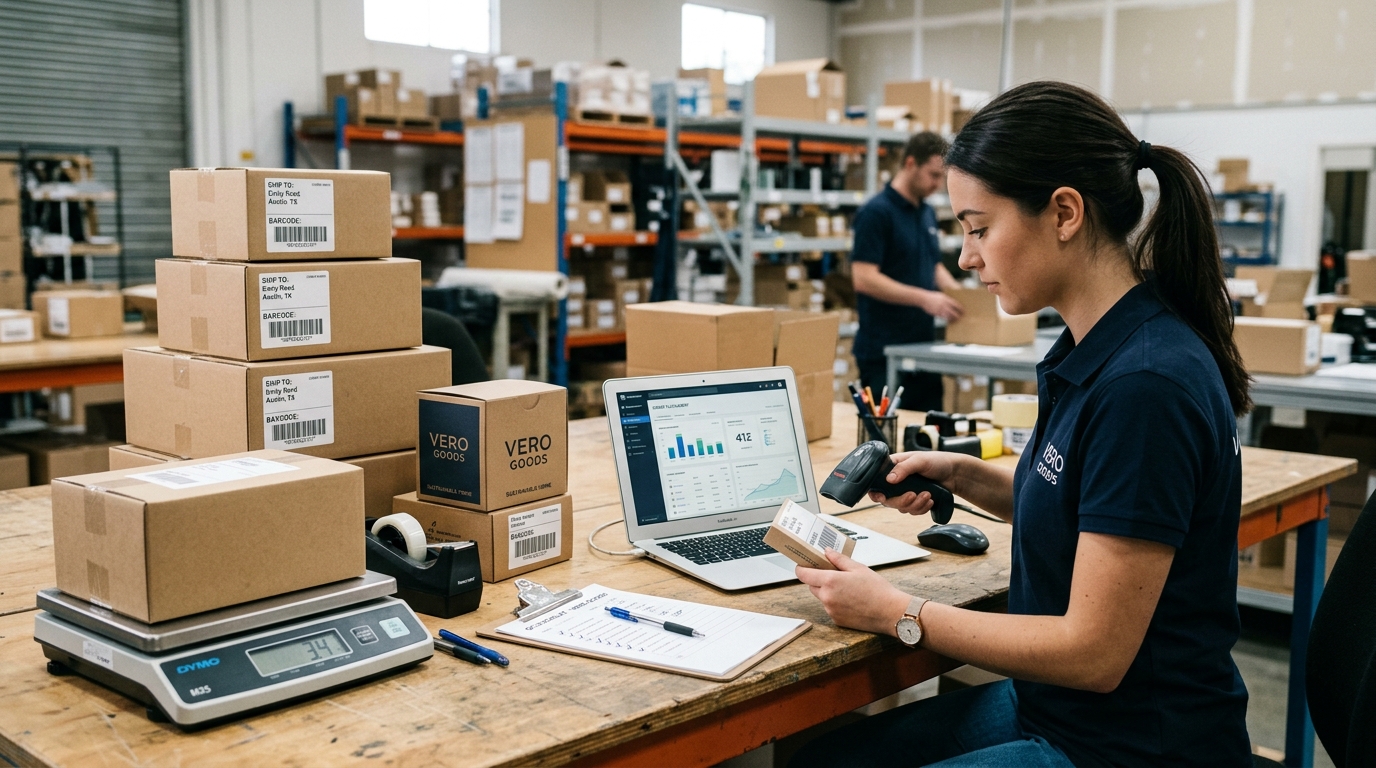

The Global Reach of Amazon Fulfillment by Amazon (FBA)
Amazon operates the most sophisticated logistics and customer acquisition engine on planet Earth. With over 300 million active customer accounts and millions of Prime members accustomed to guaranteed 1-day delivery, Amazon provides independent entrepreneurs with unmatched distribution leverage.
Through the Fulfillment by Amazon (FBA) program, third-party sellers send product inventory directly to Amazon fulfillment centers. Amazon handles warehouse storage, 24/7 customer service, payment processing, pick-pack-ship operations, and returns.
However, success on Amazon requires far more than picking a random product. It requires rigorous mathematical market validation, high-integrity overseas manufacturing, search engine listing optimization, and surgical pay-per-click advertising.
E-Commerce Margin RuleTarget products that can be sold for at least 4x their landed manufacturing cost. This ensures healthy 30-35% net profit margins after Amazon referral fees, FBA pick-pack fees, and PPC advertising spend.
Scientific Product Validation: The Data-Driven Checklist
Amateur sellers rely on gut feelings and launch pet products that nobody searches for. Experienced Amazon merchants rely on specialized analytical software (Helium 10, Jungle Scout) to identify high-demand, low-competition product niches.
- Consistent Search Volume: Primary keywords must generate at least 8,000 to 15,000 monthly searches with consistent 12-month non-seasonal demand.
- Review Ceiling Analysis: Top 10 competitors on page 1 should have fewer than 500 reviews, proving that a new market entrant can compete quickly.
- Clear Differentiation Opportunity: Study 1-star and 2-star negative reviews of existing products to fix manufacturing flaws and introduce meaningful product improvements.
- Compact Dimensions & Weight: Products weighing under 2 lbs that fit inside standard shoebox dimensions minimize expensive FBA storage and shipping fees.
Amazon PPC Advertising Campaign Structure
| Campaign Type | Targeting Strategy | Target ACOS | Primary Goal |
|---|---|---|---|
| Auto Campaign | Amazon Algorithm matches search terms | 25% - 35% | Keyword discovery and automated harvesting |
| Broad Match Keyword | Variations, plurals, related searches | 20% - 30% | Audience expansion and volume scaling |
| Exact Match Keyword | Surgical exact search queries | 15% - 22% | High-margin conversion and organic rank push |
| Product ASIN Targeting | Direct placement on competitor listings | 20% - 28% | Stealing market share from inferior competitors |
| Sponsored Brand Video | High-impact in-feed video ads | 12% - 18% | Maximum CTR and brand authority positioning |
A9 Listing Optimization: Title, Bullets & A+ Content
Amazon search engine (A9/Rufus) ranks listings based on two fundamental metrics: keyword relevance and historical sales velocity. Your listing copy must be written for both the algorithm and human shoppers.
Your product title must front-load primary high-volume keywords within the first 80 characters (critical for mobile screens). Bullet points should highlight emotional consumer benefits before technical specifications. Premium A+ Content with comparative charts and lifestyle photography increases conversion rates by an average of 5% to 15%.
Supplier Vetting & Overseas Quality Control
When sourcing from Alibaba or international trade hubs, never wire full payments upfront. Always request verified pre-production samples, negotiate clear Terms of Sale (FOB or DDP), utilize Alibaba Trade Assurance for escrow protection, and hire independent third-party inspection agencies (such as QIMA) to inspect factory batches before final dispatch.